
The Wallpaper Effect: Why Everyone Should Make A Hot Wings Flavoured Version of Their Product
Oreo have been waging psychological warfare in the supermarket aisle… They’ve mastered the art of controlled chaos in an effort to stave off "The Wallpaper Effect”, where even the most iconic brands become invisible through sheer familiarity.
We’re breaking down the brain science behind why the world’s most beloved cookie keeps making flavours nobody asked for, and why your brand should probably do the same.
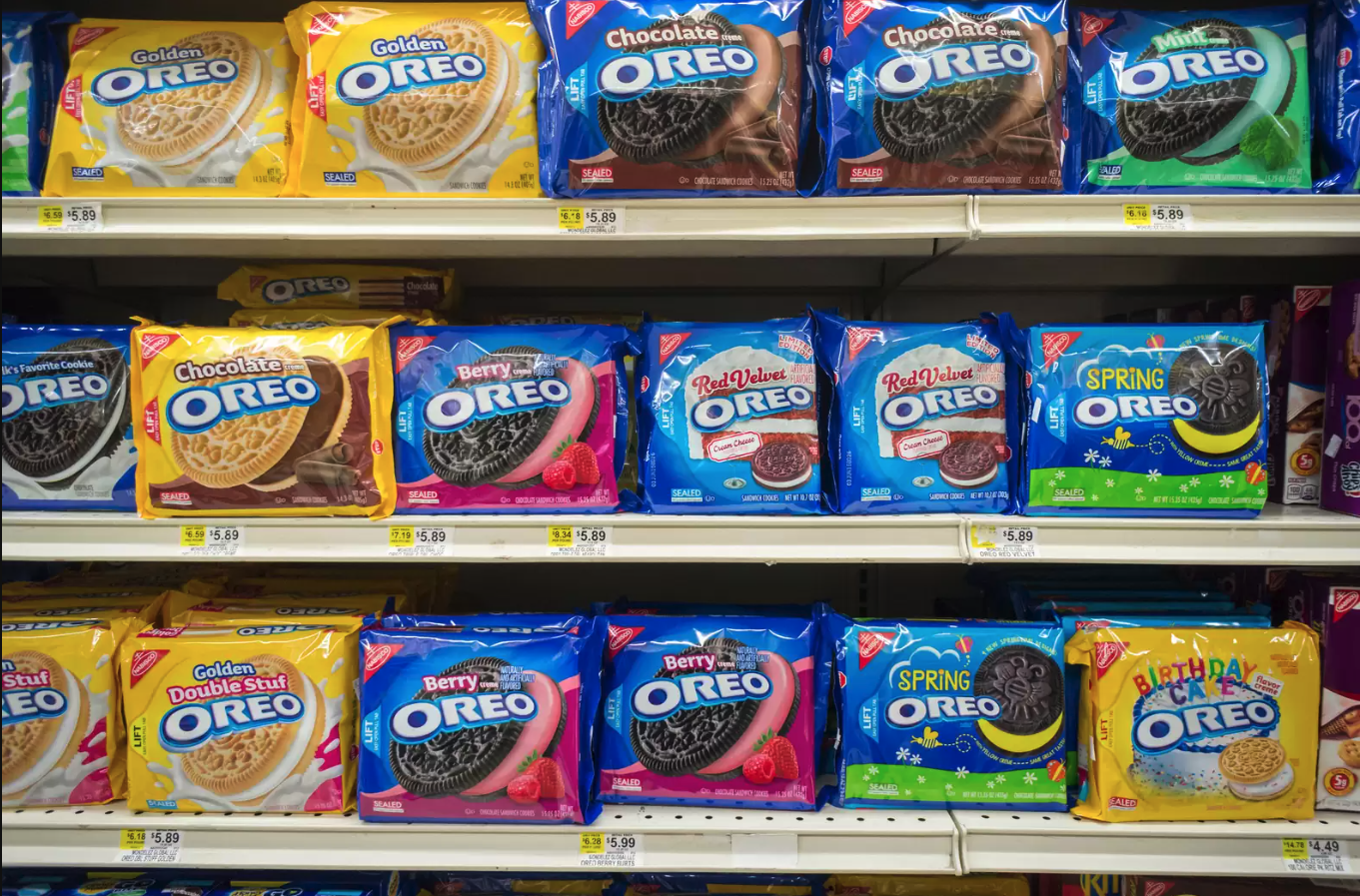
There’s probably no biscuit more iconic than the classic Oreo.
Everyone knows how to “Twist, Lick, and Dunk”. Everyone recognises the quintessential royal blue branding. Heck, most people could even recite some of their old ads from memory (where they learned for the first time that “chocolate isn’t good for dogs”).
And sure, as Aussies, we have to say that TimTams could give them a run for their money.
But no matter where you are in the world, or what language is written on the exterior, that obnoxiously bright packaging tells you that creamy chocolate goodness is ready and waiting for you.
So why is it that we barely notice them on the supermarket shelf anymore?
Our eyes simply slide over the wide array of sweet treats on offer and keep scanning for the next item to tick off the shopping list without even noticing those delicious cookies.
Whilst that’s absolutely great for my (struggling) diet, it’s not so great for Oreo as a brand.
But then all of a sudden… we do notice the Oreos again.
Just not quite the double-stuffed we’re so familiar with.
Hot-wings Oreos. Cherry-cola Oreos. Swedish Fish Oreos. Post Malone Oreos (thankfully inspired by his album, not an actual Post Malone flavour… ew).
And whilst you may not be throwing them in your trolley (because let’s be honest, hot-wing Oreos are a… choice), something very interesting is happening in your brain.
(NO) PERKS OF BEING WALLPAPER
Do you have a comfort TV show that you watch on repeat? One that you can recite the punchlines so perfectly in sync with that they may as well just hand you the Emmy now?
A TV show so familiar, so comforting, that it just fades into the background and lulls you to sleep…
And therein lies our lovely little brand psychology secret: the Wallpaper Effect.
It’s exactly what it sounds like. Just as you stop noticing patterned wallpaper after you’ve lived with it for a week, your brain stops paying attention to things that are always there and always the same.
This is because our brains have a survival mechanism called habituation. When something is predictable and safe, the brain labels it as “irrelevant” and lets you operate on autopilot.
Great for conserving mental energy. Terrible for long-term brand attention.
Basically, whilst we’re great at noticing new and exciting things just because they are new and exciting, we’re not so great at noticing things that are… not.
You won’t notice the new bottled water brand with peaceful images of babbling brooks and palm trees fading into the clear plastic. You will notice the new bottled water brand in a metal can that’s emblazoned with graffiti and grungy artwork (Liquid Death, anyone?).
The clever cookies over at Oreo HQ understand this.
So, every six to eight weeks, they launch a new limited-edition flavour. Sometimes it makes sense. Sometimes it absolutely does not. But that’s not the point. These novelty releases aren’t designed to replace the classic Oreo. It’s just meant to get you to notice them again.
And spoiler alert? It works well - very well.
According to Nielsen research, from 2017 to 2020, the introduction of novelty Oreo flavours contributed to an impressive 12% increase in total Oreo sales.
But that’s only half the story.
It would be easy to discount the extra sales as regular, weekly purchasers of Oreos (guilty as charged!) changing to the novelty flavour instead.
Except, during the same period, sales of the classic Oreo cookie soared by nearly 22%. Meaning, novelty flavours didn’t cannibalise the sales of the core product, but instead actually amplified them, in a distinct (and measurable) way. Because marketing teams love measurable things.
At the core of it, it’s a pretty simple strategy - use novelty to attract attention and consideration so you sell more of your classic product (with a little extra sales boost driven by the urgency of unique limited-editions).
By breaking through that boring old wall of habituation with some downright bizarre flavours, it reminds us why we fell in love with the original in the first place.
We love you, Oreos!
WHEN NOVELTY ISN’T JUST NOVELTY
There’s no denying that when something is a novelty, it’s fun! It’s new! It’s exciting!
But labelling this sort of marketing technique as just a “novelty” is a disservice to the great minds behind it.
It’s a science-backed, brain-tricking, psychological strategy, thank you very much.
It’s exactly what the big brains over at Oreo have narrowed down to a fine art, much like they’ve mastered the marketing art of ritualisation.
But it’s not the only strategy they’re using on you. We’re looking into the psychology principles behind why novelty items turn us into Ash Ketchum from Pokémon, and make us want to catch them all:
Novelty Bias: Okay, this one might be an obvious one, but boy does it work. Our brains are hard-wired to prioritise what’s new because, historically, new things might’ve been threats… or opportunities… or food. Probably food. Novelty interrupts autopilot, forces a micro-pause, and earns attention before logic has a chance to intervene. You don’t need people to buy the weird thing, you just need them to notice it. Attention is the real currency here.
Scarcity Effect: Limited editions are just that - limited. And for some reason, it turns us into hoarding savages. And that reason? Science. Limited editions are marketing’s most reliable pressure cooker. When something is framed as temporary, our brains inflate its value and panic slightly about missing out. Suddenly, we’re not calmly deciding whether we want it, we’re deciding whether we’ll regret not having it. People share, compare, collect, and yes… hoard. All perfectly rational behaviour, obviously.
Brand Halo Effect: This is the antidote to the Wallpaper Effect. Novelty pulls the brand back into focus, and once you’re paying attention again, everything else feels shinier by association. The product you already trusted now feels more relevant, more interesting, more current… even though nothing about it has changed. Just by bringing you into their world for a moment, they’re bringing it right back to the front of your brain. Where it’ll probably stay until you make a purchase (win).
Emotional Connection: They say nostalgia is a mind’s trick, and this is true even for cookies. Whether it’s creating flavours based on memorable childhood treats or bringing back past fan-favourite limited editions, they’re playing on your emotions (in a nice way) to increase your likelihood of purchasing them. Logic might justify a purchase, but emotion opens the wallet. So even though you might not remember every flavour that’s come and gone, you will remember how the brand made you feel when you noticed it again.
THAT’S THE WAY THE COOKIE CRUMBLES…
Now, you don’t have to reinvent the wheel cookie entirely to get your brand to stand out again.
Even through their rogue flavours and even stranger collaborations, the Oreo brand never changed. It was still the same blue packaging, still the same product essence, still Oreo.
And that’s important, because we want to capitalise on brand recognition through consistency. We just don’t want to become boring.
Which brings us back to the Wallpaper Effect.
If your brand feels invisible right now, it’s probably not because your product isn’t good enough (unless that is the problem, in which case you might need to address that… urgently). It’s because your audience has learned to walk right past you without a second glance.
Create moments of novelty that reconnect people with what you already do well, and give them a reason to do a double-take.
And statistically, this works beyond Oreos. Limited-edition releases in food, fashion, toys and even cosmetics have repeatedly shown that novelty products can drive incremental revenue, increase overall product consideration, and pull (bored) dormant buyers back into the fold.
The mechanics are simple human psychology, and psychology doesn’t really care what industry you’re in.
Even if that double-take is to question your sanity on creating hot wings as a flavour option.
Wondering how to bring a bit more Oreo to your brand?
1. Introduce controlled novelty (without burning it all down)
You don’t need to reinvent your entire brand every quarter. In fact, please don’t. That’s a terrible idea. Instead, layer novelty on top of what already works. Limited-run products, seasonal packaging, a one-off collaboration, a cheekily playful campaign angle. The goal isn’t complete and utter brand chaos. Just enough “wait, what?” to pull people out of autopilot and back into your world.
2. Make something temporary on purpose
Scarcity isn’t simply when you forgot to place your last stock order, and now everything is sold out on your website (oopsie). You can manufacture it too*. When something has a clear start and end date, people pay attention. They talk about it. They decide faster. Whether it’s a short-run product, a pop-up offer, or a once-a-year service package, temporary things feel more valuable simply because they don’t hang around forever. Sounds like a cheesy inspirational quote, sure, but trust us - it works.
(*For a masterclass in manufactured scarcity, check out our blog on the Hermes Game.)
3. Don’t chase novelty at the expense of recognition
Here’s the fine line to walk: novelty works best when it’s clearly you. Oreo can go rogue with flavours because the blue pack, the cookie, and the ritual never change. Your brand should work the same way. Keep your core consistent (visuals, voice, values) and let novelty do the job of reintroducing people to what you already do well.