
The Cerulean Effect: What The Devil Wears Prada 2 Teaches About High-Low Marketing
Most people think they “discover” what they like. In reality, culture hands it to them—upstream decisions dressed up as personal taste. That’s the Cerulean Effect: prestige gets established at altitude, then trickles down through influence, retail, and conversation until it lands in the mainstream as something that feels inevitable. And The Devil Wears Prada 2 campaign built a whole marketing machine around it.
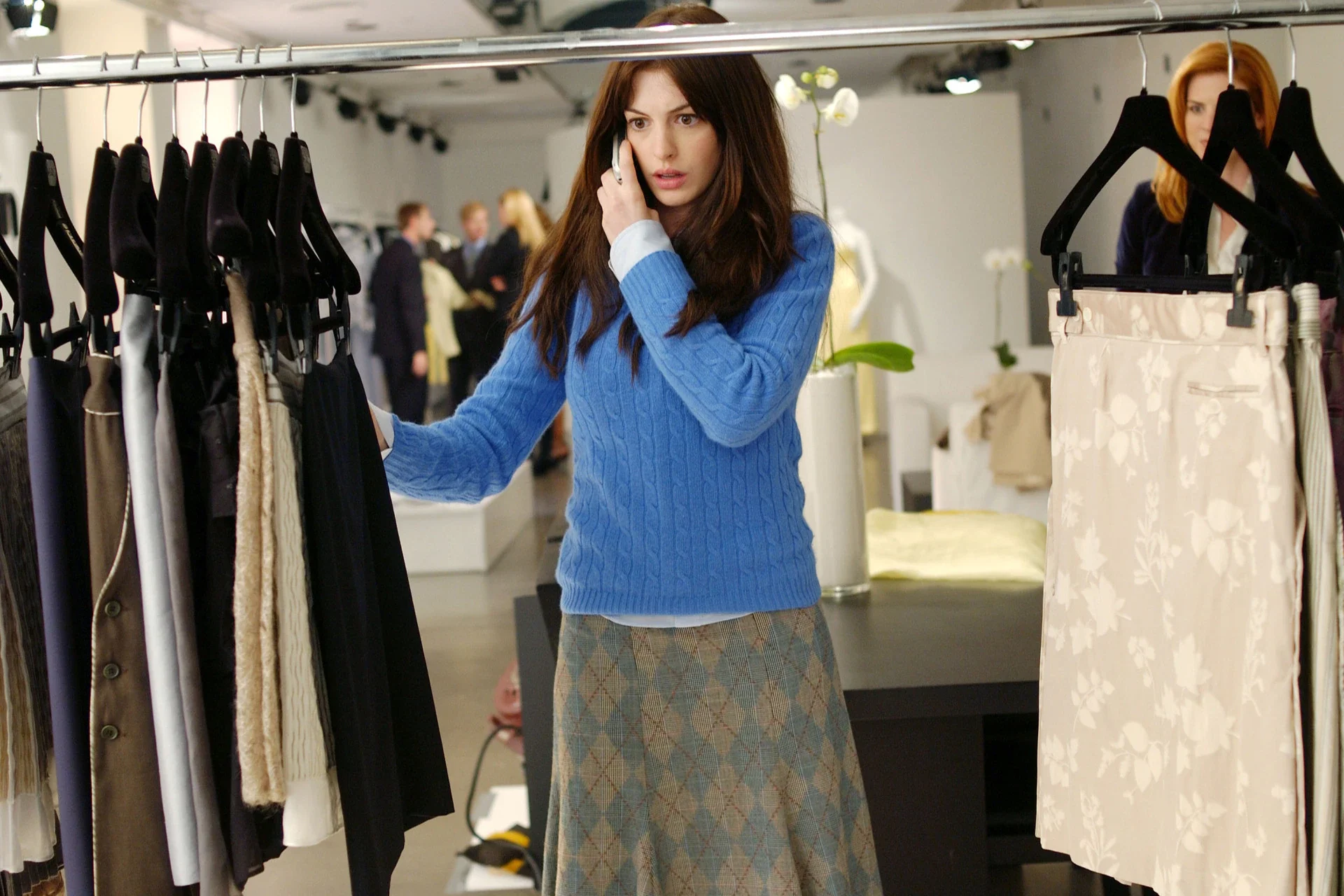
Cast your mind back to 2006. A simpler time, if you will.
A fictional magazine editor looks at her assistant's blue sweater and proceeds to verbally dismantle her entire sense of self in approximately ninety seconds.
Of course, it’s Meryl Streep’s iconic (should’ve been Oscar-winning) cerulean monologue.
If you somehow don't know it (and seriously, what rock have you been hiding under?), take a quick Google immediately. We'll wait. Just don’t move at a glacial pace.
The point Miranda was making (between the devastation) was about how cultural influence moves. A decision gets made at the very top. It filters down through layers of industry, retail, and trend. By the time it arrives in your wardrobe, you think you chose it. But you didn't, not really. You just didn't see who made the choice for you.
And now, twenty years later, the marketing team behind The Devil Wears Prada 2 took that exact principle and ran their entire campaign on it.
And turns out, they’re not the only ones doing it, either.
THE CERULEAN EFFECT DEFINED
Right, so here's what we're actually calling the Cerulean Effect.
The monologue explained how cultural relevance trickles — a decision made at altitude, passed through layers of industry and influence, until it arrives at ground level wearing the costume of a personal choice. Prestige is established upstream to the few, then access is sold downstream to the masses. Everyone along the way believes they're making a personal choice.
The Devil Wears Prada 2 campaign is the most recent masterclass in this. The marketing team structured their brand partnerships across tiers with the precision of someone who has absolutely read the cerulean monologue as professional development material.
At the top: Dior and Valentino, who dressed the cast for press appearances in pieces that treated the sequel as a genuine fashion moment in history, exacerbating those wishful dreams of envy we all had of Andy Sachs getting her makeover (forget the job — every single girl would’ve killed for her Chanel knee-high boots). Fancy vodka brand Grey Goose created signature cocktails representing the film, including ‘The Cerulean Goose’ and ‘Groundbreaking Spring Spritz’. Meryl Streep posing on the cover of Vogue, but as herself, the lines between fiction and reality were left productively blurry as some wondered if it was Miranda Priestly herself gracing our presence on the newsstand. The release date of the movie was as close as possible to the first Monday in May (if you know, you know). The fashion industry's participation became load-bearing rather than superfluous. Because without those top-tier endorsements, the cultural positioning of everything below them wouldn't have held.
Then came the middle tier. Samsung's Galaxy S26 Ultra campaign built an entire sub-narrative around a modern-day Emily using AI to manage the logistical chaos of working for someone like Miranda, especially in a heart-stopping moment for assistants everyone when the wrong car arrived. It required you to know the film to appreciate it. Which meant that if you got it, you felt rewarded for caring, and suddenly, we have a very different relationship between brand and consumer than "our product appears in this movie." Old Navy's cerulean collection named itself after the monologue directly. Again, a move that only works if your audience is already in on the joke and fluent on the references — and confirmed that they were, at a considerable scale.
At the bottom of the trickle: Diet Coke as the official beverage, Walmart's cerulean linen collection, Starbucks character drinks available to absolutely anyone who walked in. Mass access, priced accordingly.
By the time a customer picked up a cerulean shirt at Walmart, the cultural meaning of that colour had already been established several layers above them. They weren't just buying a linen shirt. No, no — that’s comical. In fact, they were buying into a moment that people in very different rooms had decided, months earlier, was significant. The customer thought they were making a personal choice.
Miranda would understand.
LUCKY FOR US, IT’S A TWO-WAY STREET
Unlike the streets of Melbourne, the Cerulean Effect isn’t a one-way street. Which is great for us, and unlucky for Melbourne (if you’ve tried a hook turn, you know my pain).
Sometimes, luxury goes looking for mass culture on purpose. It's their one chance to take their own rebellious act of creative provocation to the industry. Or, becoming more frequent, it's a desperate bid for cultural relevance from a house that's been feeling a little too much like a stuffy museum exhibit (and not the glorious Met Gala kind). And sometimes — and this is the one that makes brand strategists weep with joy — it's a power move so confident it can only be described as devilishly theatrical.
Exhibit A: The Balenciaga IKEA bag.
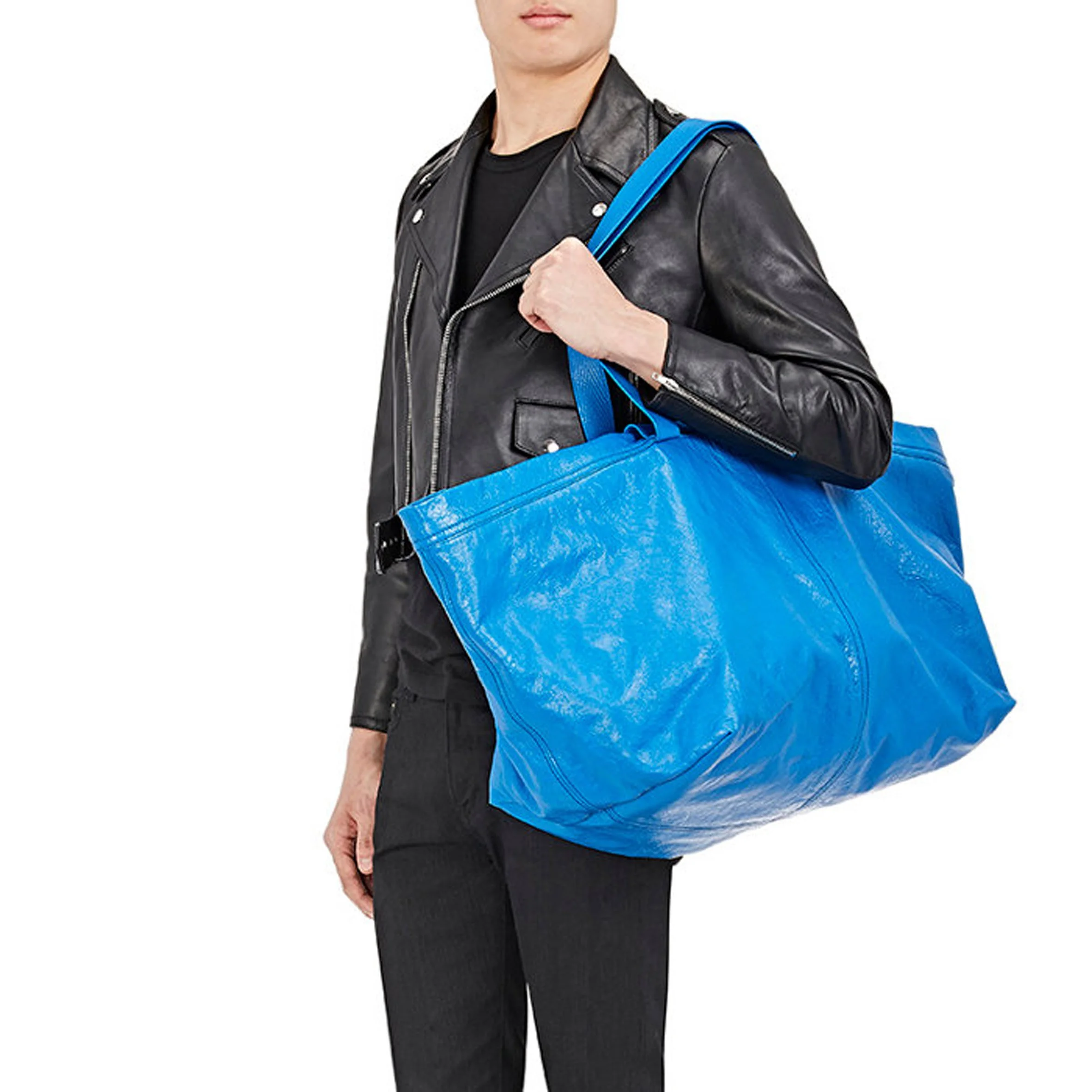
Balenciaga’s version of the 0.90c IKEA FRAKTA bag… retailing for over $2,000
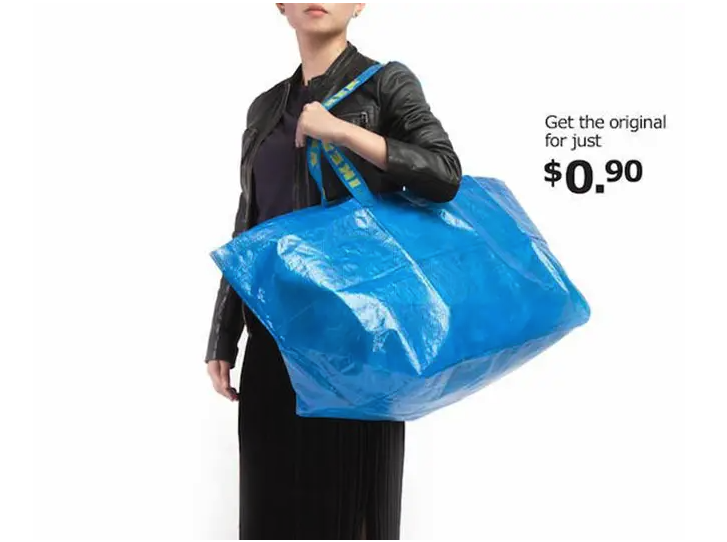
IKEA’s clever response
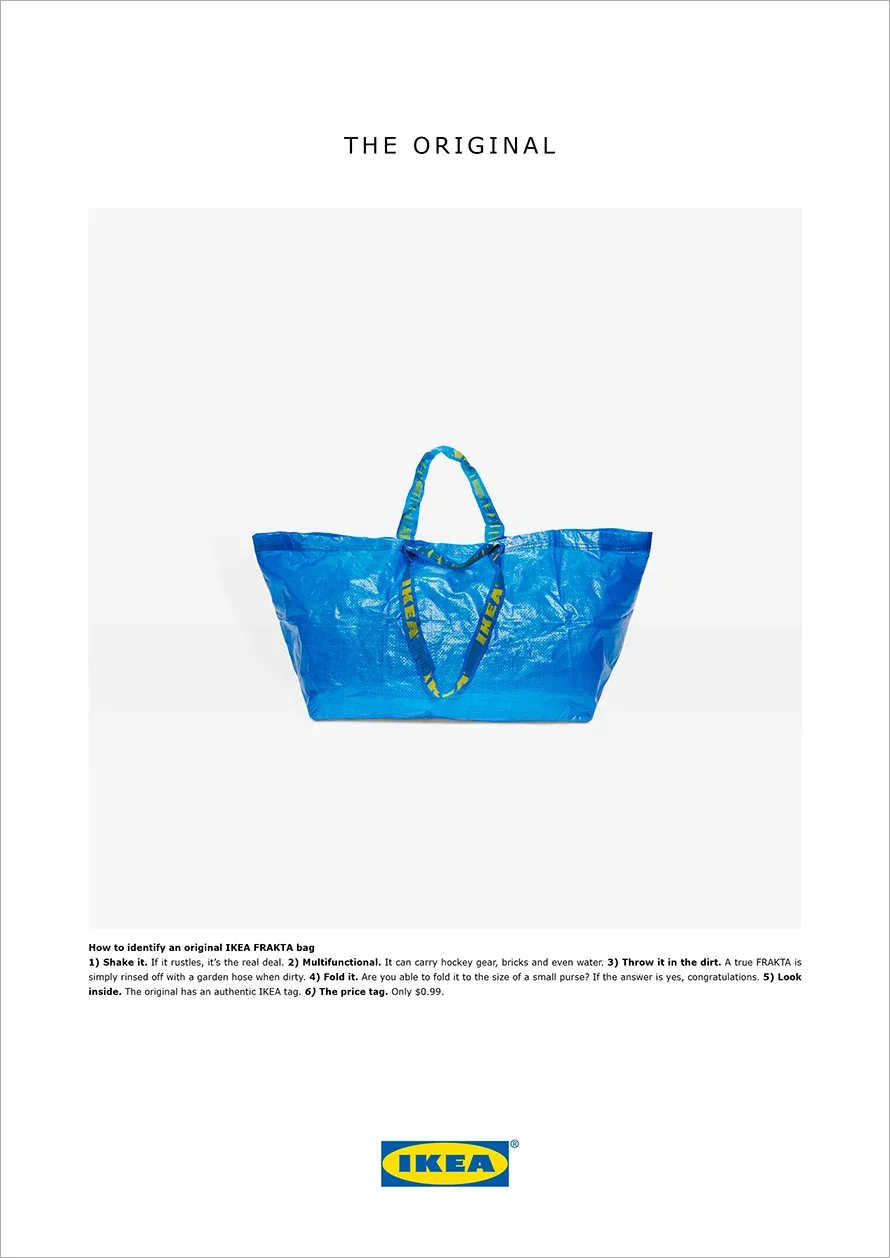
IKEA’s guide to identify the original
In 2017, Balenciaga released the Arena Extra-Large Shopper. A vibrant, royal blue, off-the-shoulder bag that could store everything you could possibly ever need to carry at one single time. And suspiciously, almost aggressively, identical to the IKEA FRAKTA bag that has been living in the boots of family cars and stuffed at the bottom of kitchen cupboards since 1996. The Balenciaga version retailed for an eye-watering $2,145 USD. The IKEA version? Retails for $1.75 AUD. Less than the equally fantastic IKEA hot dog (don’t knock it ‘til you’ve tried it).
IKEA's response was, genuinely, one of the great pieces of reactive marketing ever assembled (excuse the pun). They released a cheeky print ad, "How to identify an original IKEA bag", listing its qualities: "Holds more than 25 kg. Unbreakable. Water resistant. Comes in blue. It's also available in a Balenciaga version." Then they suggested shoppers test authenticity by scrunching it into a ball and seeing how it springs back.
Psychologically, this was a demonstration of the Cerulean Effect running in full reverse. Balenciaga took a mass-market object, something with zero aspirational positioning, something found in the hands of literally everyone, and arbitrarily assigned luxury status over it. The FRAKTA bag stayed the same, but its meaning changed, simply because of who decided to care about it and at what price point.
Balenciaga got cultural conversation and a reputation for provocation. IKEA got a viral marketing moment that cost them the price of a single print ad. The customer who bought the $2,145 version got... the FRAKTA bag. But with the weird sort of bragging rights that only the uber-rich understand.
WHEN HIGH-LOW WORKS (& WHEN IT REALLY DOESN’T)
Not every brand that attempts to cross the high-low divide does it with Balenciaga's particular brand of knowing absurdism.
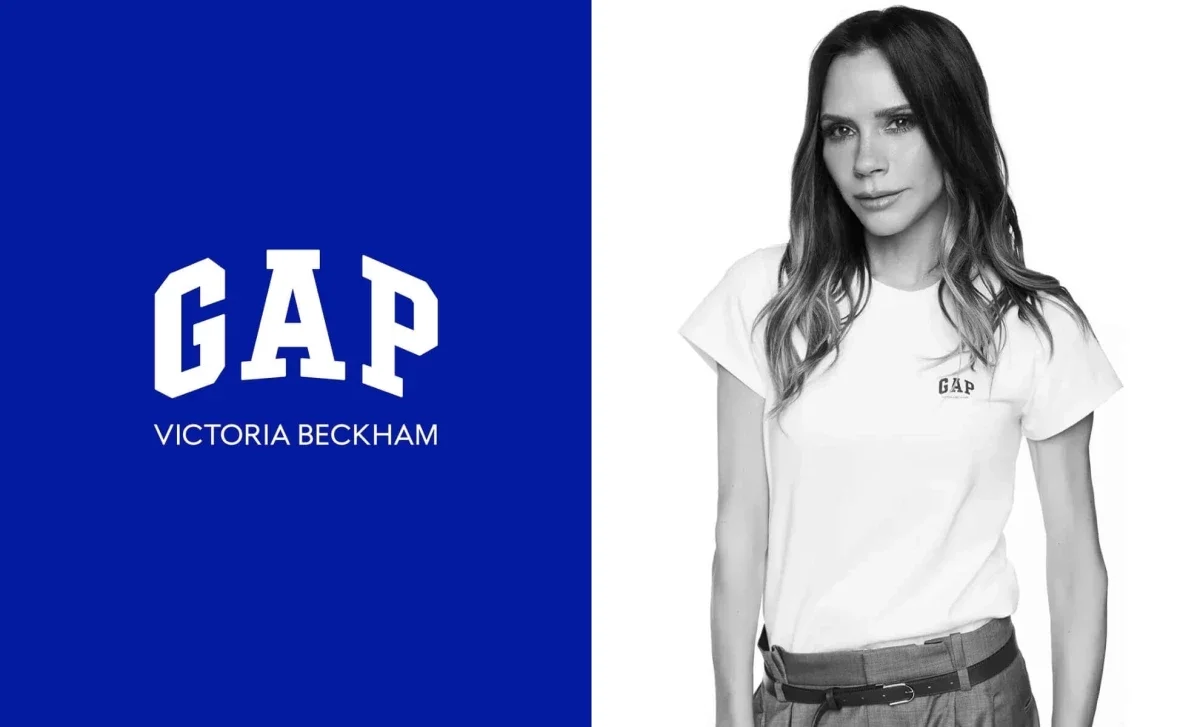
Gap x Victoria Beckham, launched in 2026, is a more earnest example, and arguably a more instructive one. Victoria Beckham spent years building a fashion house with a reputation for “quiet luxury” — or to put it more aptly, ridiculously expensive minimalism. The Gap collab seems like quite the deliberate step down the ladder: accessible price points, wide distribution, the full mass-market treatment.
The interesting psychology here is what each party was buying from the other.
Gap got credibility. After years of relevance drift — the brand had been, somewhat generously, described as the beige wallpaper of the high street, a tacky “Americanised” brand — a Victoria Beckham association suddenly pulled them back into a fashion space they'd been previously excluded from. The collection sold out. People who had not thought about Gap in a decade thought about Gap again and asked the question… “Is Gap cool again?”
Victoria Beckham got accessibility without dilution. The collection was clearly hers — the aesthetic, the palette, the silhouettes were all distinctly Beckham — but suddenly reachable by a consumer who'd never spend (either willingly or able to at all) on her high-fashion mainline. She created a new entry point into her world, and by doing it with full control, she was able to also ensure that the VB brand was an acceptable level of accessible to her standards. The Cerulean Effect, carefully constructed by a brand that understood exactly what they were doing with the tiers.
The psychological principle underneath both is straightforward: perceived value is relational. A thing is expensive or affordable, prestigious or accessible, covetable or ordinary, but always in comparison to something else. The high-low collab is a machine for manipulating those comparisons deliberately. Put luxury next to mass market and the luxury looks more luxurious and the mass market looks more elevated — simultaneously, at the same moment, for different audiences.
THE ONES WHO GOT IT TERRIBLY WRONG (BLESS THEM)
Gird your loins! It’s the worst-dressed equivalent of a branding attempt.
The Cerulean Effect requires that the luxury party actually has cultural cachet worth lending. A collaboration between a genuinely prestigious brand and a mass retailer confers meaning downward and edginess upward. A collaboration between a brand that's lost the plot and a mass retailer is just two confused parties awkwardly side by side, like distant family friends who only catch up once a year forced together for a photo.
The other failure mode is when the inauthenticity is so obvious it becomes the whole story. When collaborations feel like a cash transaction rather than a creative position — like when there's absolutely no coherent reason on Earth for these two brands to exist in the same sentence — consumers notice. They've been watching this game long enough to recognise when someone's playing it badly.
The rule the successful ones follow: both parties have to bring something real. Balenciaga brought provocation and cultural authority. IKEA brought democratic accessibility and, crucially, the wit to play along. Victoria Beckham brought a genuine aesthetic. Gap brought scale and reach. The exchange has to make sense in both directions, or the whole thing reads as desperation with a press release.
And then, the unsuccessful “x’s”. This particular hall of shame is well populated, if you need convincing. Balmain x Evian produced a limited-edition water bottle that retailed for enough money to make you question your entire relationship with hydration, but it was the kind of collaboration that exists purely to generate a press moment with no coherent creative logic underneath it. Balenciaga have made something of a hobby of this: their Simpsons collection was an obvious example of a brand doing anything, absolutely anything, to stay relevant, which is its own kind of sad desperation when you're supposedly one of fashion's most provocative houses. Manolo Blahnik x Birks is the sartorial equivalent of a blind date where neither party was told what the other one does for a living (Carrie would be absolutely horrified). And then there's Nike x Tiffany, which in theory should have been untouchable on paper — two of the most culturally loaded names in their respective categories — but landed with a collective shrug, a case study in what happens when two brands of equal status meet in the middle and neither brings the creative risk that made anyone care about them in the first place.
The Cerulean Effect requires clear water between the tiers. When the gap is too jarring, or the aesthetic logic too thin, the collaboration feels accidental and leaves audiences wondering how this marketing plan managed to get past every manager on the team… let alone get approved.
COLLABS, FOR SPRING? GROUNDBREAKING
So is the answer for high fashion brands fading into irrelevance to do a collab with a lesser brand they would usually look down their snooty yet perfectly straight noses at? Not necessarily.
Perceived value is constructed before the customer ever encounters the product. The Walmart cerulean shirt meant something because Dior and Vogue had done the upstream work. The Gap collection meant something because Victoria Beckham had spent years building her brand and name. The FRAKTA bag became cultural shorthand the moment Balenciaga decided to bring their own version to life. In each case, the meaning was built somewhere else first and then delivered to the consumer pre-loaded.
Collaborations are a borrowing of meaning, sure, but that borrowing only works if the other party has meaning worth lending. A partnership with someone whose audience trusts them, whose aesthetic makes sense next to yours, whose values are legible and consistent, transfers something real. A partnership with whoever said yes first transfers nothing except the invoice nd price tag, often to unsuspecting customers.
And the tier structure matters even at a small scale. You don't need Dior and Walmart. But you do need to think about where your brand lives in the perception stack, what's above you that could confer credibility, and what's below you that could widen access without eroding what you've built. The best collaborations are the ones that answer both questions at once.
The cerulean monologue ends with Miranda pointing out that Andy's choices aren't really her own. That she's opted out of fashion and influence without opting out of either, because she doesn't know who made the decisions upstream of her.
The Prada 2 campaign ran that in reverse, on purpose. The cultural positioning was decided at Dior level. It filtered through Samsung and Old Navy. It arrived at Walmart, where a customer picked up a linen shirt in a specific shade of blue and thought: I just really like this colour.
The customer technically made a free and independent choice.
They just had a little help deciding.
That’s all.