
Much Ado About Dupes: Is Dupe Culture Getting Out of Hand?
Dupe culture has turned imitation into a billion-dollar business, complete with TikTok hype, legal loopholes and suspiciously familiar packaging. We look at how brands can stay distinctive when copycats come armed with ring lights and a lower price tag.
Burberry once had a problem most brands would envy: people recognised its signature check instantly.
Then everyone started wearing it.
The beige, black and red pattern began as a lining inside Burberry trench coats in the 1920s. By the early 2000s, it had escaped onto caps, scarves, handbags, prams and a thriving population of counterfeits. British tabloids tied the pattern to “chav” culture, a derogatory class label aimed at working-class people, football fans and anyone committing the social offence of wearing too much branded sportswear.
The check had become famous in a way Burberry couldn’t control.
The company pulled checked caps from sale and reduced the pattern’s visibility across its range. Under Angela Ahrendts and Christopher Bailey, Burberry reportedly cut the check to about 10% of products while rebuilding the brand around British heritage, outerwear and high fashion.
Years later, the check returned to the runway with its status restored. The pattern hadn’t changed, but the context had.
Burberry’s chequered episode (sorry) reveals the central problem of dupe culture: a brand can create a distinctive product, symbol or design, then watch the internet separate that asset from everything that gave it value.
A copy can borrow the look. The original needs to give people a reason to care where it came from.
The art (?) of duping
The internet uses “dupe” to describe everything from an affordable alternative to a handbag bought from someone named Dave beside a folding table.
Legally and commercially, the distinction between the two is important.
A counterfeit pretends to be the original. It copies protected names, logos or packaging to mislead buyers about who made it. A dupe openly comes from another brand and imitates enough of the product’s appearance, function or promise to trigger the comparison.
Think “similar glow for half the price”, rather than “Chanel bag, honest”.
That line can get pretttyyy thin. Packaging, product names, advertising and design elements may attract protection under trademark, copyright, patent, passing-off or consumer law. A product can be technically legal and still earn a group chat verdict of “Oh, that’s cheeky.”
Modern dupe culture thrives in that grey area.
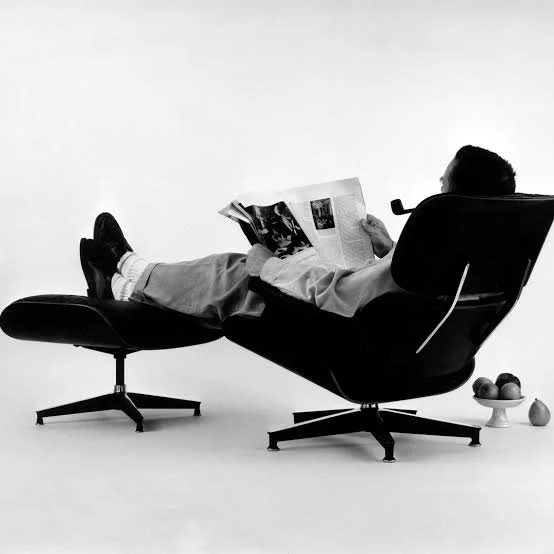
To be fair, dupe culture predates TikTok by several decades. The Eames Lounge Chair has been replicated so relentlessly that “Eames-style” has become a furniture category of its own, covering everything from licensed editions to suspiciously cheap lookalikes.
Its shape is instantly recognisable: moulded plywood, black leather and that permanently-reclined-I-read-architecture-magazines posture. That familiarity makes it very valuable, and very VERY easy to borrow.
The copying became so widespread that Herman Miller ran a “Beware of Imitations” campaign, teaching buyers how to recognise an authorised Eames chair. The ad made authenticity part of the product: anyone could reproduce the silhouette, but only the original came with the designers’ name, manufacturing standards and provenance.
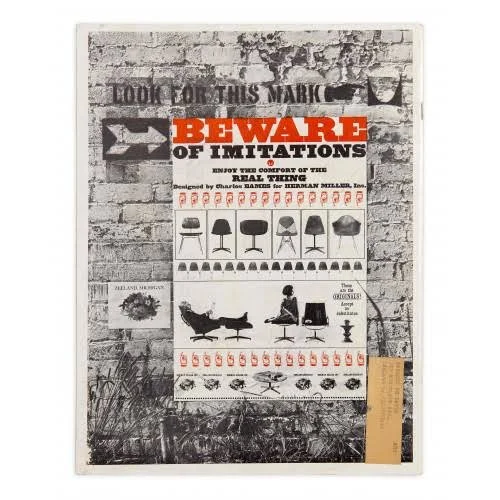
The iconic Eames x Herman Miller ad warning buyers to BEWARE OF IMITATIONS
A great example of the Eames take on dupe culture.
So, social media didn’t invent the dupe. It gave an old habit better lighting, faster distribution and an affiliate link.
Duplicitous, or discerning?
A bargain once required suspicious market stalls and a willingness to accept a perfume called “Channel No. 6”.
Now TikTok does the scouting.
If you’ve opened any form of losing-yourself-down-the-rabbit-hole-inducing social media app recently, you’ve most likely scrolled past earnest promises from influencers that they’ve found the BEST dupe of your favourite product EVER.
Not sponsored, obviously.
(Sure, Jan.)
The hashtag #dupe has 4.3 billion views on TikTok alone, and social media has played a huge part in amplifying more accessible options for younger audiences.
Creators compare products side by side, test wear time and announce that a $24 serum performs exactly like the $140 original. The discovery becomes content. Finding the dupe carries its own social reward because the buyer gets the product, the saving and the satisfaction of knowing something other people don’t.
In February 2025, 27% of US adults surveyed by Morning Consult said they intentionally bought dupes of premium or luxury products. Younger, lower-income and highly online consumers remained the most likely buyers.
Economics explains part of the appeal. Social media supplies the rest.
Dupes turn consumption into a small act of cleverness. The buyer can access the look, performance or cultural signal while rejecting the price. “I found the same thing for less” sounds smarter than “I couldn’t afford the original”, even when both sentences describe the same bank account.
There’s also less shame attached to imitation than there used to be. The word “dupe” makes copying sound playful, useful and community-approved. Language has performed a tiny rebrand on the knock-off.
And sure, brands often respond with one claim: ours is better quality.
Sometimes that’s true. It’s also hard to prove in a six-second video where the bottles look almost identical, and both products leave the creator “literally obsessed”.
Customers weigh several kinds of value at once:
Does it work?
Does it look right?
What does owning it say about me?
Do I trust the company?
Will I enjoy buying and using it?
Is the difference worth $80?
A dupe can win on function and price. Originals need stronger reasons across trust, expertise, identity, experience and belonging.
That challenge gets harder when a brand appears differently across a website, TikTok, email, retail shelves, marketplaces and creator content. Recognition depends on repeated cues: the same visual codes, voice, values and point of view appearing often enough to stick.
“Better ingredients” may be a reason to believe. It rarely carries a whole brand on its back.
MCoBeauty and “mass-tige”
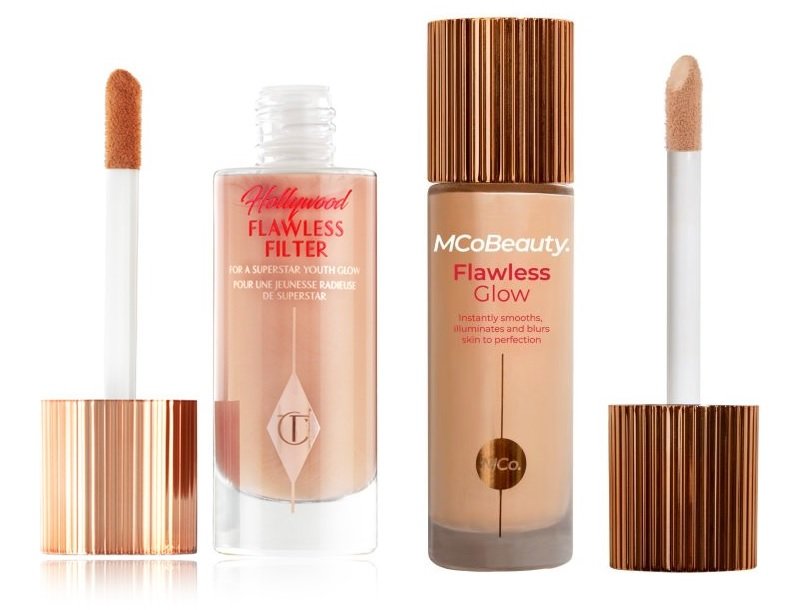
Charlotte Tilbury & MCo Beauty foundations side by side…
A little too close for comfort?
Getting sued over 5 times by competitors isn’t usually seen as a positive in the business world.
In fact, the words “legal infringement”, or “my lawyer will be hearing about this!” are usually more than enough to cause small business owners some sleepless nights staring at the ceiling in a brain spiral.
But for some business owners, it’s a proud badge of honour.
MCo Beauty founder Shelley Sullivan has created an empire based on her promise of “mass-tige”; that is, bringing prestige products at an affordable price to the masses. She’s taken on global powerhouses and won (or at the very least, settled out of court), all because she understands the fine art of duping - and how to turn it into a business now valued at over $1 billion.
MCo has an entire team dedicated to analysing the most popular offerings on the market, and then slowly picking them apart to determine what parts are legally un-dupable - and which parts are fair game.
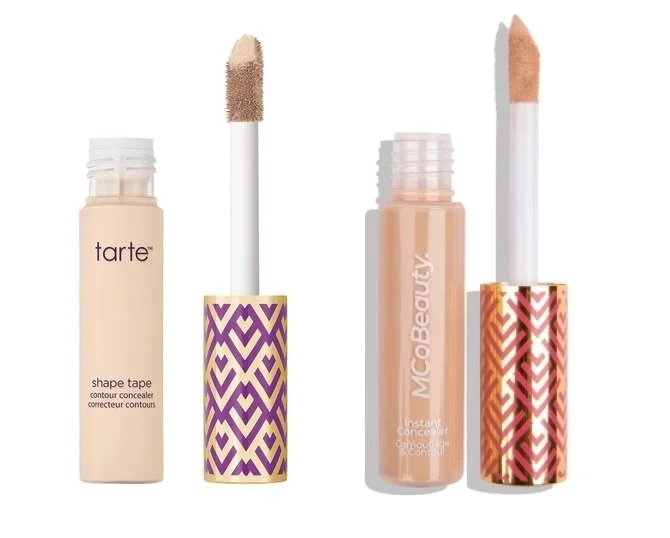
MCo Beauty’s dupe v Tarte Cosmetic’s iconic ‘Shape Tape’ concealer
The company’s “luxe for less” ethos means that no beauty product is safe from a dupe. From Charlotte Tilbury to Tarte Cosmetics, all the way to Sol de Janeiro and Glow Recipe, MCo has released almost identical copies of some of the beauty world’s favourite products.
Note the word, almost identical.
For example: Charlotte Tilbury’s Flawless Filter foundation retailing at $74. One of the brand’s top-selling, cult-level products.
Cue: MCo Beauty’s Flawless Glow foundation at a maximum price point of $35.
Almost identical bottle. Almost identical name. Almost identical product.
MCo Beauty’s team pours over every patent, every protection, and perfectly threads every legal loophole, just so they can market their version of other people’s product.
The success of the business says something uncomfortable for prestige brands: many buyers enjoy the reference. They understand exactly what MCoBeauty is doing, and the proximity to the original makes the cheaper product easier to recognise, assess and discuss.
The copy becomes part of the pitch. And there’s almost nothing that people like Charlotte and her team can do.
Note the word, almost.
Why Oscar Wilde was wrong (and what you can do about it)
We’ve all heard the old adage. “Imitation is the sincerest form of flattery”, and all that.
Blah, blah, blah.
For most business owners, having their best-selling product directly copied isn’t flattering.
It’s actually downright annoying, thanks all the same.
But you’d be sorely mistaken to think that these brands are taking it lying down either.
Lululemon invited dupe buyers to feel the difference
In May 2023, Lululemon hosted a two-day Dupe Swap in Los Angeles. Customers brought in imitation Align leggings and received a new $98 pair of the originals.
Around 1,000 people took part. Lululemon later reported that roughly half the guests trading in dupes were new to the brand.
The campaign replaced an abstract quality claim with a physical trial. People could feel the fabric, fit and construction for themselves. Lululemon treated the dupe as customer acquisition rather than a personal insult delivered in stretchy pants.
The returned leggings were recycled through Debrand into uses including home insulation and mattress stuffing. Even the disposal process supported the brand’s wider story.
Charlotte Tilbury put authorship back on centre stage
Charlotte Tilbury launched “Legendary. For a Reason.” in January 2025, placing her most copied products at the centre of the campaign and calling them “undupable viral sensations”.
The strategy focused on provenance: Tilbury’s career, product development, artistry and scientific collaborators. A dupe may resemble the bottle. It can’t retroactively acquire 30 years of the founder’s expertise or claim authorship of the original idea.
The brand has also used the law when the copying crossed a protectable line. In 2019, the High Court of England and Wales found that Aldi infringed copyright in designs used for Charlotte Tilbury’s Filmstar Bronze & Glow palette.
Storytelling and legal protection serve different jobs. One builds preference. The other defends ownership.
Olaplex duped the dupers
Olaplex answered copycat chatter with a fictitious product called Oladupé No. 160. More than 100 creators received packaging that looked like an Olaplex release. Under the Oladupé label sat the real No. 3 Hair Perfector.
The number referenced the brand’s portfolio of more than 160 patents. The reveal included a deepfake of then-CEO JuE Wong before Wong appeared herself, reinforcing the campaign’s point: appearances can be copied and manipulated; patented technology is harder to fake.[9]
Olaplex used the visual language of dupe content while pulling attention back to proof. And the distinction gave the joke something solid underneath.
Can you escape dupe culture?
Right, so Lululemon can afford to give away $98,000 worth of leggings. Charlotte Tilbury has a legal team and Kate Moss on speed dial. Olaplex has 160 patents and a budget for elaborate influencer campaigns.
What are you supposed to do?
You don’t need a legal team or a billion-dollar valuation to take something useful from this.
Whilst no product is un-dupable, there’s one undeniably un-dupable partof every business: how your brand makes people feel.
This is why branding matters more in the age of dupes than it ever has before.
If someone can buy a product that looks 90% the same as yours for 30% of the price, why would they choose yours? It’s not because of the product itself. The dupe has proven that the product can be replicated.
They choose you because of:
Your story (Charlotte Tilbury's 30 years of expertise)
Your values (Lululemon's textile recycling partnership)
Your innovation (Olaplex's patented formula)
Your community (the people who feel like insiders when they use your product)
Your consistency (showing up the same way, everywhere, every time)
Your personality (the brand voice that makes people feel understood)
So sure, dupes can copy your product (annoying). They can copy your packaging (really annoying). They can even copy your colour palette and logo style (mind-blowingly annoying).
But they can never copy your story and deeper brand world (if you have one, that is).
Take that, dupes!
What smaller brands can protect
Dupes can copy the look. They struggle to copy accumulated trust, distinctive behaviour, community and a clear point of view. The dupe explains the category; your brand explains why the original still pulls its weight.
Make your difference easy to explain. Replace vague claims like “premium quality” with specific proof: your process, materials, expertise or decisions.
Build recognisable assets beyond your logo. Use colour, type, packaging, photography, phrases, rituals and sound consistently—and protect what you can.
Give loyalty somewhere to live. Create reasons to stay through education, personal service, repairs, events, early access and member experiences—not just discounts.
Use comparisons as positioning research. If customers compare you with another brand, show clearly who your product is for, how it differs and why that difference matters.
Know when to call a lawyer. Document original work, protect your assets early and get advice when copying creates confusion or crosses a legal line.
If you want a one-two punch against dupers, give us a bell.
Book a free brand audit below, and we’ll show you how to sharpen your brand story, tone and world, then kablam the copycats out of the running.